
A rangehood is the super sidekick to your stove. It keeps the kitchen air clean by collecting airborne grease, smoke, and other particles!
But with all the oils and dirt passing through it, you’ll need to wash the filters regularly.
Whether they’re aluminium mesh or stainless steel, you can soak rangehood filters in hot water with bicarb soda and dish soap, followed by a good scrub.
Some filters can also go in the dishwasher, but check if the manufacturer allows it first.
Ready to tackle that grease? Here’s a step-by-step guide on how to clean rangehood filters, no matter the type.
How Often to Clean | Types of Filters | Preparing for Cleaning | How to Wash Rangehood Filters | Cleaning Filters in the Dishwasher | When to Replace Your Filters
Why Clean Rangehood Filters
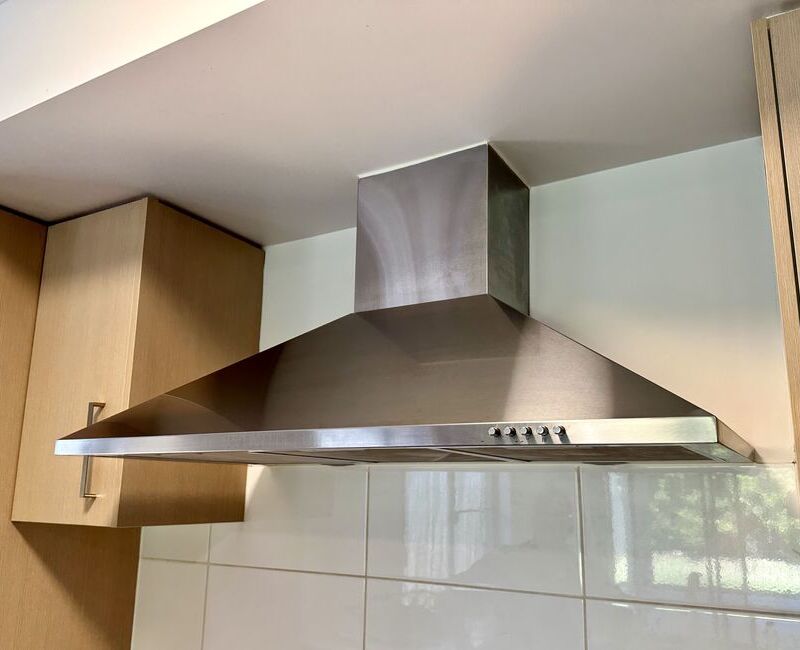
The clearest reason is to maintain fresh air in your kitchen.
Unlike exhaust fans, which mostly circulate air, rangehoods remove contaminants. They also draw out excess heat and steam, so your space stays comfortable.
But once the filters are clogged with grease, they won’t do their job well!
Airflow is reduced, which makes the kitchen start to feel stuffy. Any lingering particles may also worsen indoor air quality, which affects anyone with asthma or other respiratory issues.
Food hygiene may be affected, too. Dirty filters can grow bacteria and mould, which is the last thing you want sitting directly over your dinner.
Cleaning the filters regularly can also help your appliance last longer.
Grease or cooking residue buildup weakens rangehood suction. The motor is forced to work harder than it should, which can wear down the rangehood over time.
Lastly, greasy filters can become a fire hazard! Since cooking is already a leading cause of house fires, keeping them clear is an essential safety step.
How Often Should You Clean Rangehood Filters?
Generally, it’s best to clean rangehood filters every month as part of your kitchen cleaning routine.
Still, it depends on how much you cook and what you cook, though.
You may need to wash the filters more often if you use the stove daily, or if you like stir-fries and crispy chicken! It’s also a good idea to refresh the filters after any major cooking to avoid buildup.
If you don’t cook a lot, a deep clean every 2–3 months can work.
Signs that your filter needs attention are:
- lingering smoke in the kitchen
- loud humming or rattling from the motor
- strong cooking odours even on higher settings
Some models even have a warning light that tells you when it’s time to wash the filters.
Rather not handle the grease yourself? You can book a deep clean with a house cleaning service, rangehood included!
Types of Rangehood Filters
Rangehood filters come in different types — some are washable and some are not.
For washable types, how you clean them depends on the material and even the specific model. So, it’s important to know what kind of filters you have before you start.
Whenever you’re in doubt, always refer to the rangehood manual for guidance!
Non-washable rangehood filters
If your rangehood recirculates air back into the kitchen instead of venting it outdoors, you likely have charcoal or carbon filters tucked behind the metal ones.
Do not wash charcoal filters — water will ruin the activated carbon. And once they get wet, they won’t work anymore! Instead, charcoal rangehood filters should be replaced every few months.
Just note that you still need to wash the outer metal filters. They’re prone to buildup since they trap heavy grease before it goes to the charcoal sheets.
Washable rangehood filters
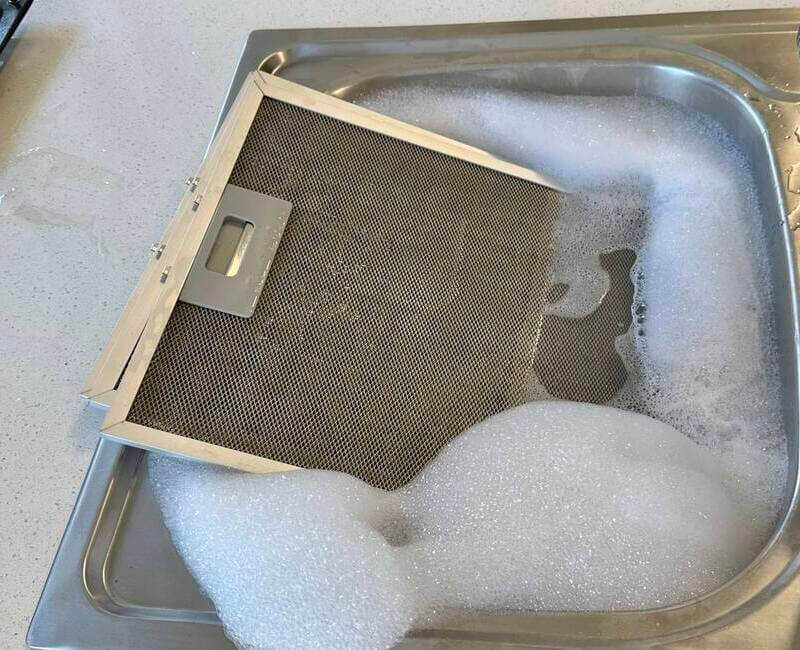
If your rangehood connects to a duct, it likely uses one of these washable filters:
MESH RANGEHOOD FILTERS: Have thin layers of metal mesh that trap grease as air passes through. These are the most common ones in home kitchens.
BAFFLE RANGEHOOD FILTERS: Easier to clean than mesh, since they have angled, interlocking slats to direct dirty air towards the duct. They maintain their suction power even when dirty.
HYBRID RANGEHOOD FILTERS: A combination of mesh and baffle filters. They usually have a baffle-style exterior with an inner mesh layer as part of a dual filtration system.
Beyond the design, though, rangehood filters also come in different materials, and you need to consider that before cleaning.
Aluminium vs stainless steel filters
The best way to clean rangehood filters depends on what they’re made of!
If you’re unsure about the material, refer to the manual or try the magnet test. If the magnet sticks to the surface, the filter is likely stainless steel. If it doesn’t and the filters are very lightweight, they’re probably aluminium.
Aluminium rangehood filters (more common in mesh types) are more delicate. It’s usually not advisable to put them inside a dishwasher, because that can cause “pitting” — tiny holes caused by corrosion — over time.
You also need to avoid:
- Harsh chemicals like bleach and caustic soda
- Acidic cleaners like vinegar, lemon juice, or citric acid
- Oxygen bleach, especially with sodium percarbonate
These can discolour aluminium surfaces or make them look dull.
Instead, a safer approach is to soak and handwash aluminium mesh filters. Use hot water and gentle alkaline cleaners — like bicarb soda plus a grease-cutting dishwashing liquid.
On the other hand, stainless steel filters (usually baffle types) are tougher and can handle stronger cleaning agents.
While it’s perfectly fine to handwash them, they’re usually dishwasher-safe as well. Still, check the manufacturer’s guidelines to be sure!
Here’s a quick guide on how to clean rangehood filters based on the material:
| ALUMINIUM | STAINLESS STEEL |
| More common in mesh filters | More common in baffle filters |
| Usually not dishwasher-safe; avoid harsh cleaners | Usually dishwasher safe |
| Handwash using warm water, bicarb soda, and dish soap | Can handle a range of cleaning agents |
Note that this is not a hard rule!
Some mesh filters could be stainless steel, and some baffle filters might use aluminium. And if you have a hybrid type, the inner mesh may be aluminium, so it’s better to stick with mild cleaning methods.
Whenever you’re in doubt, it’s always a good idea to spot test your cleaning method first to confirm that it won’t cause damage.
Preparing for Cleaning Rangehood Filters
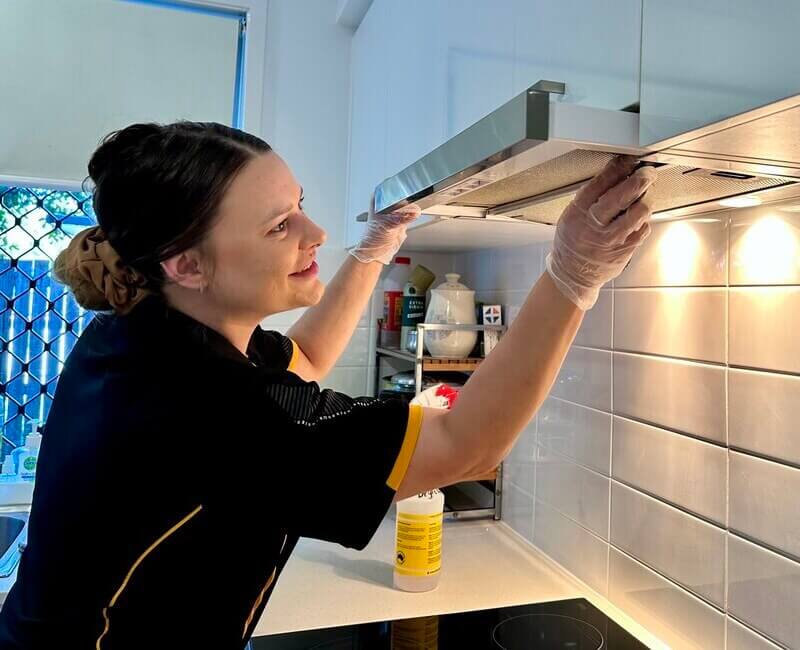
A little prep beforehand can make the whole process easier!
What you’ll need to clean rangehood filters
Prepare these materials for cleaning your rangehood filters:
- Hot water
- Bicarb soda
- Anti-grease dish soap
- Clean cloths (for drying)
- A non-abrasive scrub brush (like a bottle brush)
How to remove rangehood filters
Before removing the filters, power off the rangehood and unplug it. You don’t want the fan accidentally starting while your hands are inside!
If you’ve just been cooking, wait about 30 minutes to let the rangehood cool down.
Most filters are easy to remove. They’ll either slide or pop out from underneath the hood. Look for a metal knob or latch that will release the filters.
In some models, you’ll need to unscrew the sides to take the filter down. Keep any screws in a container or on a small towel so you don’t lose them.
Always consult your rangehood manual for instructions on how to remove the filter. This ensures you don’t damage the rangehood and void the warranty (or lose your bond if you’re renting).
How to Wash Rangehood Filters
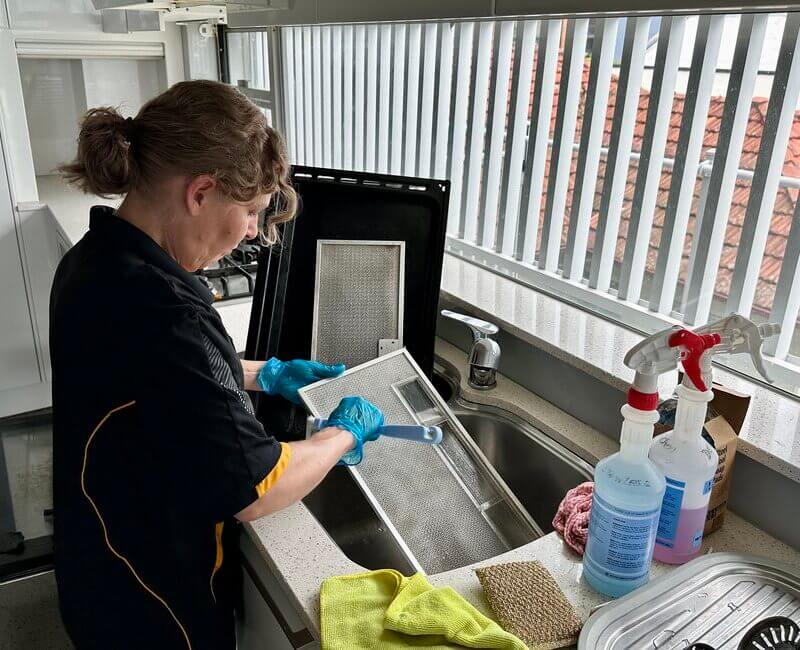
The key to cleaning oily rangehood filters is to give them enough time to soak! That breaks down built-up grease, including grime in grooves or any inner layers.
To start, fill the kitchen sink with hot water. Your tap’s hottest setting works, but you may also use boiling water.
If you don’t want to use the sink, grab a large laundry tub instead. Just make sure that it can tolerate high heat.
Add a generous squirt of anti-grease dish soap and ½ to 1 cup of baking soda. Stir with a metal spoon (or anything heat-resistant) to mix everything well.
Once the solution is ready, slide the filters in so they’re completely submerged.
If your sink is too small, just soak half the filter, then flip to repeat on the other half.
Let the rangehood filters soak for 15–20 minutes, or longer if they haven’t been refreshed in a while and are very sticky.
After that, take the filters out of the water. Give both sides of the filters a gentle scrub with a soft-bristled brush or a soft sponge, paying extra attention to grooves and corners.
Once that’s done, rinse the filters thoroughly under warm water to wash away the loosened grime and any residue from the bicarb soda.
The filters must be completely dry before you put them back. Otherwise, it can lead to mould inside the appliance! So, shake off the excess water and lean the screens against a wall to let them air dry.
While they’re drying, use that time to wipe down the rangehood itself or your stove top. That way, everything’s sparkling clean once you replace the filters!
Cleaning Range Hood Filters Using a Dishwasher
If the range hood manual confirms that your filters are dishwasher-safe, that can be a convenient shortcut!
Follow any specific instructions in the product guide. Some brands recommend a normal cycle, but others allow a hot cycle depending on the type of filter and material used.
You’ll usually need to place the filters on the top rack — make sure that the spray arms aren’t blocked. Then, run the appropriate cycle using your usual dishwasher tablet or detergent.
Some manufacturers also recommend skipping the heated dry cycle, as that can warp or discolour the filter’s surface.
In that case, take out the range hood filters after the wash. Give them a good shake to remove the excess water, and leave them to air dry.
When to Replace Rangehood Filters
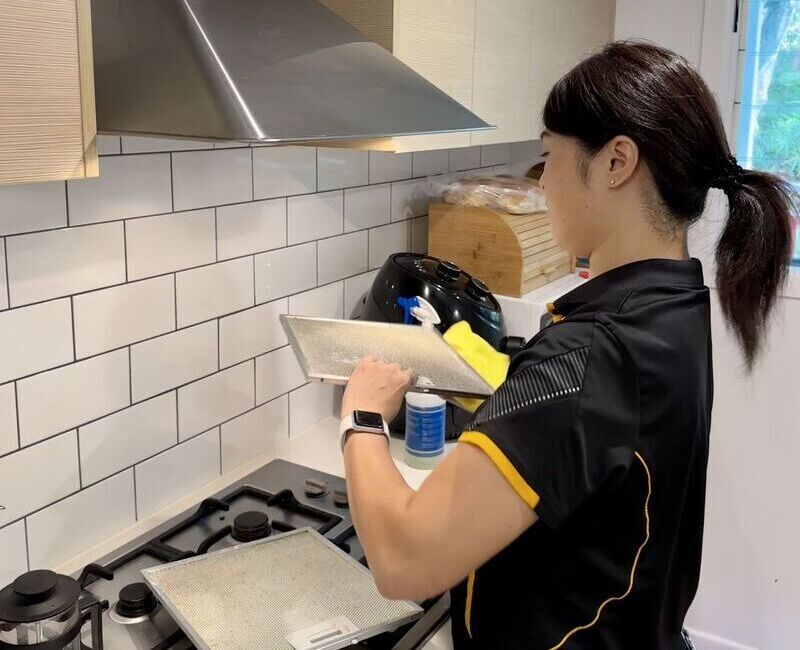
Cleaning extends the lifespan of your rangehood filters, but most types are not designed to last forever! Replacing old filters is also part of proper maintenance.
MESH AND HYBRID FILTERS: Replace yearly, or every 2 years if you don’t cook as often. Moreover, if the mesh looks frayed or is sagging, it’s time for new filters.
CHARCOAL FILTERS: Change after 120 hours of cooking or roughly every 3 months.
Baffle filters typically don’t need replacing unless they show signs of damage, such as rust, corrosion, or warping.
Just make sure the filter fits your rangehood — check the manual or look up the model online first.
How to Reduce Grease Buildup on Rangehood Filters
Rangehood filters are built to catch grease, so they’re bound to collect grime eventually. However, there are a few ways to slow down the buildup.
If you’re frying or searing, use a lid. That traps grease right away and minimises the oil that gets mixed with the air.
Some extra ventilation also helps. Open a door or turn on an exhaust fan to reduce the amount of airborne grease that can land on your filters.
Additionally, you want to keep the area cleaner overall. Make it a habit to wipe the underside of the hood after cooking to remove fresh grease before it hardens.
FAQs About Cleaning Rangehood Filters
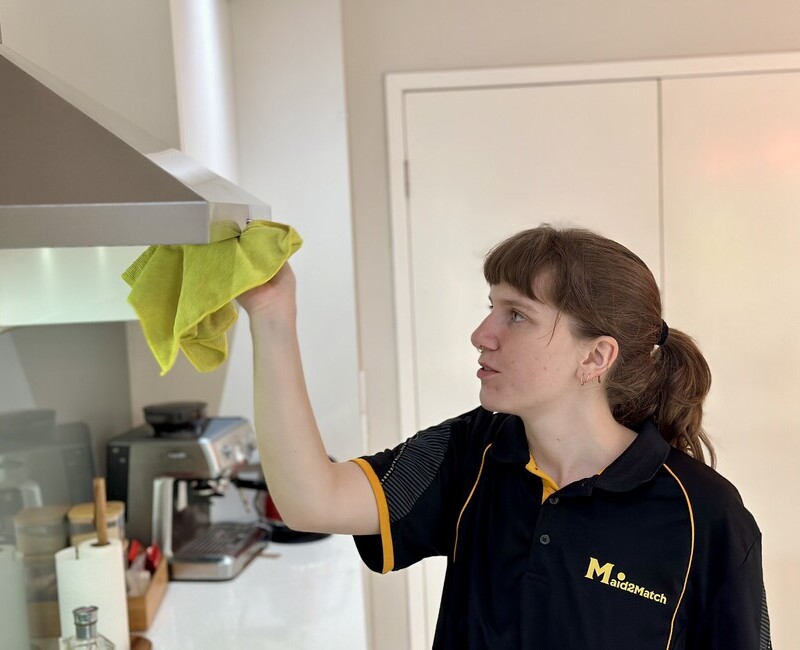
Looking for more ways to clear the gunk out of your rangehood filters? Here are other useful tips you need to know!
Can I clean rangehood filters without soaking?
A long soak is the most effective way to loosen built-up grease on rangehood filters. Scrubbing alone may not remove all the grime, especially in inner mesh layers.
For a quick refresh, a hot water rinse and light scrub can sometimes work, but only for lightly used rangehoods!
How to clean rangehood filters with vinegar and baking soda
Vinegar and baking soda can both help with cleaning, but they should not be used together!
Since they sit on opposite sides of the pH scale (vinegar is acidic and baking soda is alkaline), they’ll neutralise each other when mixed. In short, they’ll become ineffective for cleaning.
A better approach is to use them in sequence — just avoid vinegar on aluminium mesh.
For stainless steel filters, soak them in hot water with baking soda and dish soap.
Scrub and rinse, then spray 1:1 vinegar and warm water onto the surface to break down any remaining grime. Rinse everything well afterwards.
Can you use CLR on range hood filters?
No — it’s generally not recommended to use CLR (calcium, lime, rust remover) on range hood filters!
They won’t do much for oily buildup anyway, since CLR products are designed for mineral deposits, not grease. They’re also too harsh for aluminium filters.
When in doubt, use bicarb soda and a grease-cutting dish soap. Or simply stick to the cleaning methods approved by the rangehood manufacturer.
Can you clean rangehood filters with Napisan?
You can use bleach-free Napisan to clean a stainless steel rangehood filter. However, it’s not suitable for aluminium filters, nor hybrids with aluminium mesh!
Napisan contains sodium percarbonate, which causes pitting and discolouration on aluminium surfaces.
How long does it take for rangehood filters to dry?
Usually 1–2 hours, but it depends on the room temperature. To speed things up, take them outdoors or simply use a fan!
Do I need to clean a rangehood filter duct?
As long as you properly maintain your rangehood and filters, you usually don’t need to clean the duct.
The filter collects airborne grease, dirt, and other particles, so the duct is only venting out air.
However, if the rangehood malfunctions, it’s best to find a professional. Duct cleaning is a specialised service, and it’s often difficult to access the ductwork by yourself!
